
Some say the Bianchi X4 is the most perfect steel racing bike ever produced. Whether for the beauty of the svelte lines or pairing the Bianchi X4 with Campagnolo’s design icon, the C-Record groupset. Then there is the X4's revered ride quality, combined with exceptional handling characteristics.
The X4 was the last of the special lugged steel, Bianchi Specialissima bicycles. By 1991 Bianchi Reparto Corse had changed the Specialissma look forever, replacing the beauty of traditional Italian steel bicycle design, with simplified lugless frames and unicrown forks.
Borne of technological advancements, modern carbon bicycles may have found a place at the head of the line, presenting the rider with fun factor plus. There's no doubt that a carbon race bike delivers an exhilarating ride, especially for those who seek the simple pleasure of belting full tilt, up and down a twisty road as fast as their legs will carry them. Yet more than ever steel is still the choice for many Bianchi aficionados.
Often described as works of art, steel bicycles evoke a sense of history and passionate involvement, with the very notion of cycle sport. Modern day artisan steel bike building workshops are springing up all over the globe and old steel bikes are being collected and re-purposed. Amongst this new wave of steel bike aficionados, there are devoted collectors of specific Italian brands. For the dedicated Bianchi collector, the Bianchi X4 is at the top of the list of must have bikes.
The problem that comes with this highly prized rare steel, is that they don't come up for sale very often. Also thin on the ground are solid facts about this enigmatic Bianchi team machine. When it comes to the question of exactly what a Bianchi X4 racing bicycle is, the answer is concealed in an array of variations. It's almost as if X4 stands for a code which defies those who choose to try and break it. Such is the sway of these revered Bianchi bicycles, last week when I posted about the Bianchi X4 Team Issue bike, I was drawn into continuing to answer the question of how the Specialissima Bianchi X4 came to be.
Even the name X4 Bianchi is an elusive target. First there is the X3, then to find the genesis of the X4 we have to look back to history and the century between 1885 and 1985, ending in the centenary year of the Bianchi brand,1985. To celebrate one hundred years of racing, the Bianchi Centenario was conceived to represent the company's proud tradition. The Bianchi Centenario had to be different to all other Bianchi bicycles that had gone before it.
"This limited edition masterpiece has been created for those who want to celebrate our anniversary with an innovative symbol for the next 100 years of achievement."
The Centenario featured some shared characteristics with previous Reparto Corse designs. Accompanied by some very lavish embellishments, with almost every part receiving the touch of the pantograph. It's the subtle changes we are interested in here, as some were transferred to define the X4 and some had already been introduced with the Bianchi X3.
SEAT STAY ATTACHMENT STYLE - TOP EYES
1. First is the seat stay attachment style of the top eyes. Sometimes referred to as seat stay "Stay Ends". On early 1980’s Specialissima Bianchi’s the top eyes were flat and finished with chrome. The new Bianchi X4 top eyes received a rounded style, on the X4 they were painted not chromed. Further the top eyes are embellished with the word "Bianchi" in a cursive script, usually filled with gold coloured paint, but sometimes dark blue.
Top Eyes The part of the seat stays that attaches the top portion of the stays to the main triangle, this can be achieved in a multitude of ways and designs. Known in generic terms as plugs. Top eyes can be turned or investment cast. For more details on top eyes see these two suppliers of frame building materials, Long Shen and Framebuilding
Also referred to as seat stay "Stay Ends".
INVESTMENT CAST FORK CROWN
2. The X4 investment cast chromed fork crown received special treatment with the Bianchi crest emblazoned into the top and the word Bianchi on the sides of the crown. On some variants the forks and crown were painted black, this version was known as the Bianchi Argentin-X4. The 1987 catalogue describes the fork crown as, Columbus SL with investment cast chromed engraved fork crown. In the first year of production, 1986 the forks on X4’s during first months of production were constructed with an internally lugged fork crown, including this Speed Bicycles 1986 Bianchi X4. The same fork crown was used for the Bianchi X3 fork.
COLUMBUS TUBE SETS
3. The X4 was constructed first with Columbus SLX in1986 until about mid 1987, then SPX for a few months. There was a cross over point for a few frames where either SLX or SPX was used. At about the beginning of 1988 Reparto Corse started constructing frames using TSX and used this tubing to the end of the X4 production run in about 1991. Even though these tube sets had different properties, for example SPX was engineered for larger frames, the serial numbers show a linear approach to the use of tube sets, not a custom approach to suit the tubing to the rider or type of competition.
HEAD TUBE PANTOGRAPH
4. Bianchi X4 head tubes display the Bianchi eagle on the head tube, with special detailing and decals omitted. Creating a special Bianchi head tube.
REAR BRAKE BRIDGE
5. Rear brake bridge.
The first bridge was a common square bridge also used on the Centenario and the last Bianchi X3’s.
The rear brake bridge design changed over time.
BOTTOM BRACKET
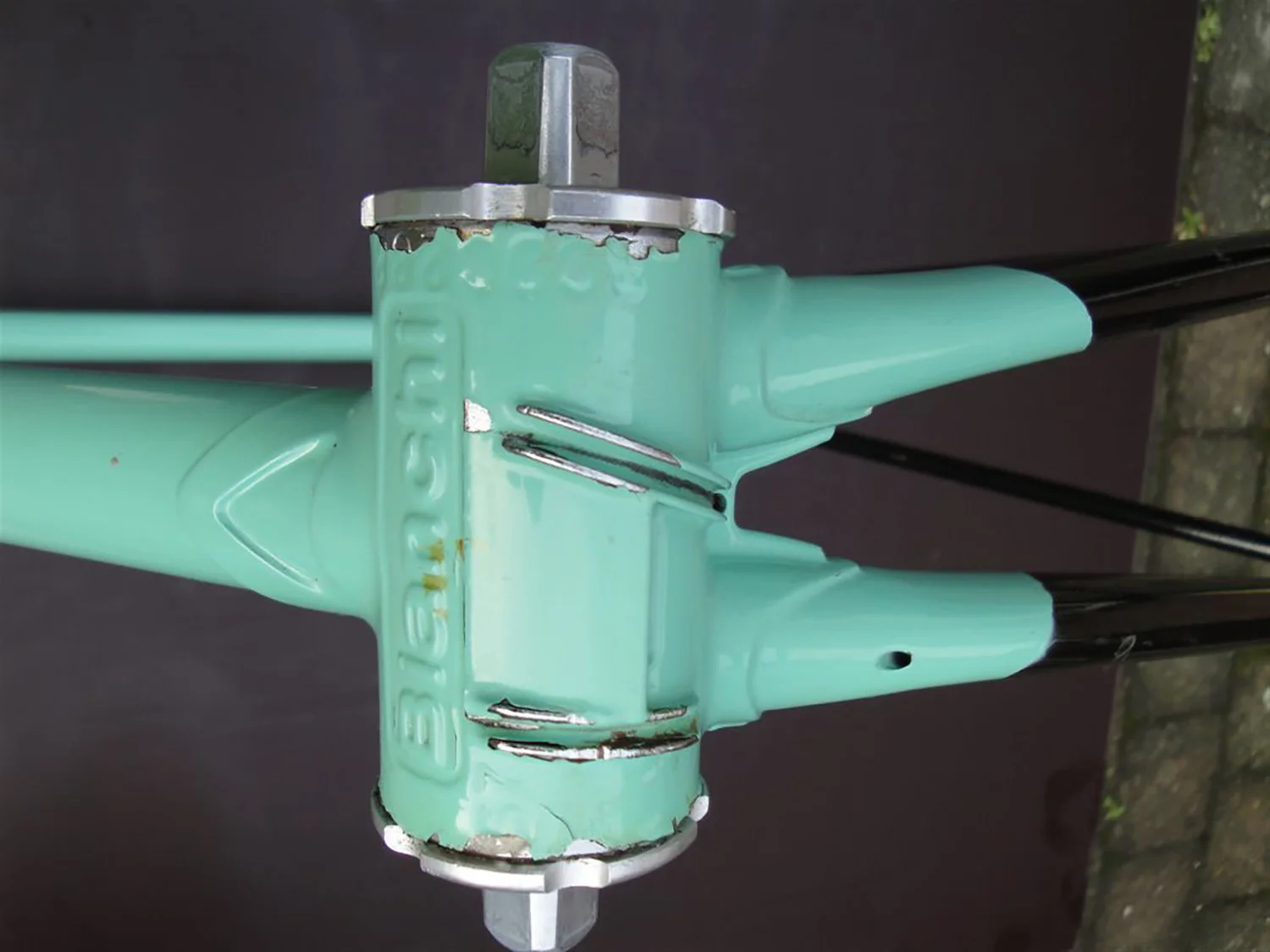
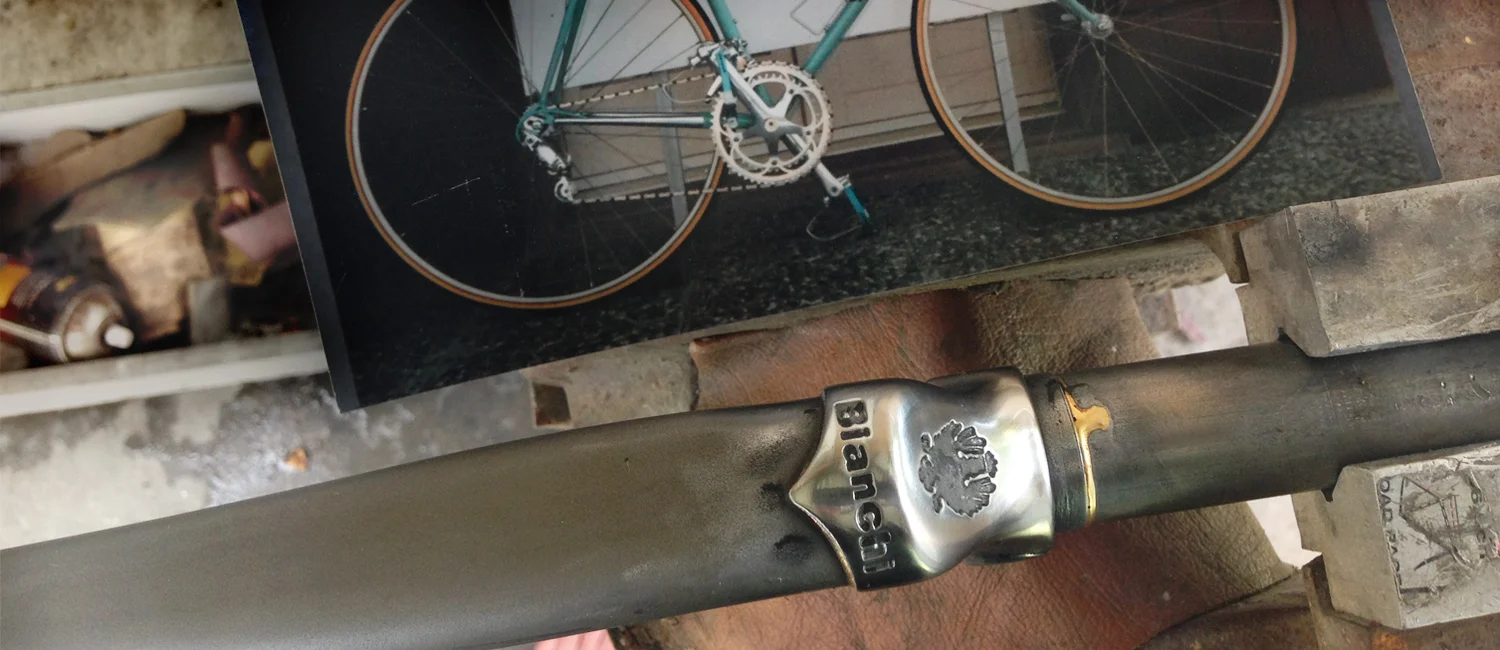
6. The bottom bracket has the letter B cast into either side, and the word Bianchi underneath. The first Bianchi X4's were produced using a version of a Centenario bracket, these brackets originally were cast with "Bianchi 1985 - Centenario". They were then modified for the Bianchi X4 by either grinding away the word Centenario and either "19" or "1985". Alternatively brazing fill material was added to obscure the Centenario origins.
Interestingly, Centenario's were sold with two different brackets including the one we see here. The "Centenario 1985" brackets inspired the design for the later X4 investment cast bracket.
Here's an example of the “Bianchi Centenario” bracket in CC Rider's flickr feed.
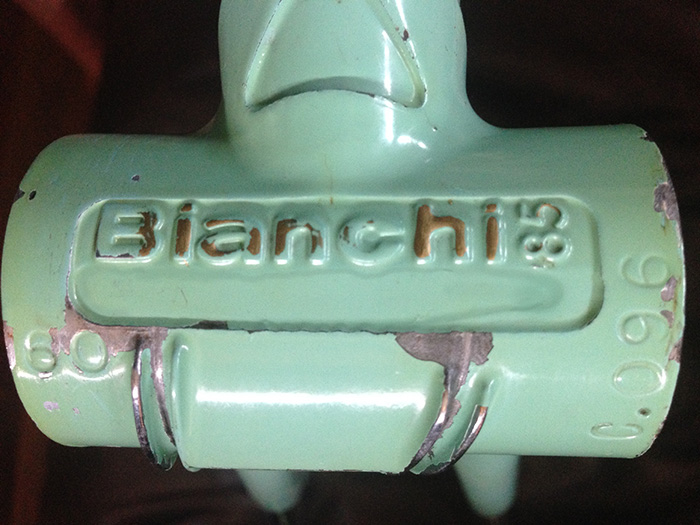
A Bianchi "Centenario 1985" bottom bracket adapted for the X4. You can clearly see where the bracket has been machined, leaving behind just Bianchi 85.

The second type of investment cast bracket installed in the Bianchi Specialissima X4
PAINT COLOURS
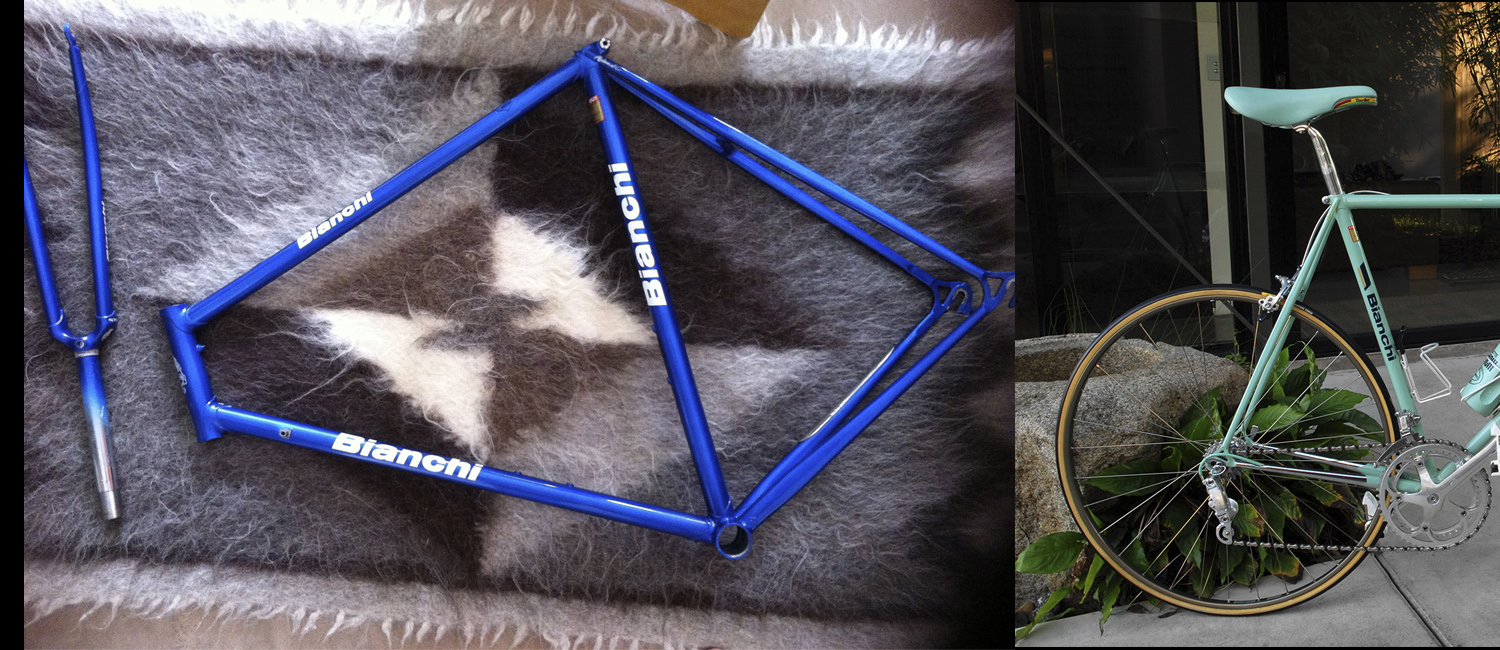
7. Painted in either Bianchi Celeste or Bianchi Celeste and Black, no chrome plating. After Moreno Argentin’s world championship win in 1986, Bianchi marketed the black and celeste version as The X4 Argentin. Today, many celeste X4’s have been converted in the paint shop, to Argentin colours.
There are a very small number of white and celeste X4’s based on the 1989 Gewiss Bianchi team bike colour scheme.
Variations of black, pearl white, yellow and other random colours can be found with original factory paint.
CHROME
8. Chrome on the Bianchi Celeste models (not Argentin versions), chain stays, fork crown, front and rear dropouts and front derailleur braze on.
CAMPAGNOLO C RECORD
9. Campagnolo Corsa Record equipped, throughout six years of production - 1986 to 1991, year to year evolving as the Campagnolo C Record group sets changed. Frames were also sold as a stand alone product, some owners choosing to equip their X4’s with Shimano Dura Ace or high end Campagnolo group sets like Croce D’Aune.
3ttt and ITM HANDLEBARS AND STEMS
10. Catalogues show a switch from 3ttt stem and bars to ITM from 1988 onwards.
CABLE ROUTING
11. Early X4's in 1986 and 1987 were shipped with external rear brake cable guides, by 1988 until the end of production of the Bianchi X4, rear brake cables were routed internally.
DECALS
12. Different decals, mostly the dark blue with gold Bianchi wing detail, but others were used, like my team bike, with plain dark blue.

The set pictured here do not have the bottom “gold feather” of the Bianchi eagle wing, all blue and intended for the 1987 Bianchi Piaggio Swiss team bikes.
If you can get your hands on original factory decals, good luck trying to use them. Source good quality reproductions from a company like SSSinc, it will make your life easier.
THE VERY SPECIAL BIANCHI SPECIALISSIMA X4 - PANTOGRAPHED with factory ANODISED components- 1986 and RARE.
In the 1987 USA catalogue, the Bianchi X4 is listed for sale, with anodised and pantographed components, yet few of these versions exist.
The special component set is pictured below.
Campagnolo Super Record brake calipers, factory anodising in a distinct smoke grey

Bianchi X4 special groupset, Pantographed Campagnolo Super Record brake caliper with special Reparto Corse anodising.
2. Pantographed Campagnolo Corsa Record cranks and chain rings. Reparto Corse special smoke grey anodizing.

These special Reparto Corse worked cranks and chain rings are where many would be fake artists come unstuck. The smokey grey chain ring colour is tricky to match. Polishing the cranks after pantographing removes the original anodised finish and the Campagnolo shield logo on later versions.
These special Bianchi Campagnolo chain rings have a different finish to Campagnolo Century and other darker Campagnolo anodised parts from the era, making the Bianchi items unique

An attempt at faking the factory anodised colour and pantographing. Compared to the crankset above, this is just a grey anodised chainring, not even a close colour match for authentic Reparto Corse work.

Reparto Corse worked Campagnolo C Record crankset with special smoke grey anodising.
3. The right side Campagnolo C Record friction gear shift lever was pantographed with X4.

Campagnolo C Record, pantographed Bianchi X4 gear shift lever.
4. The 3ttt Record LA 84 stem was also pantographed with the Bianchi X4 logo.

Special Reparto Corse worked components, handlebar stem 3ttt AR84, pantographed with Bianchi X4, special 3ttt handlebars wrapped with celeste Almarc leather. Selle Italia Super Turbo celeste saddle. All matching the timeless Bianchi celeste Specialissma look.

The special pantographed and anodised X4 is rare. Here complete with celeste Selle Italia Super Turbo saddle. This is C.096 a late 1986 Specialissima X4.
The Mondiale as an example of mid 1980’s Bianchi production, with similarities to the Bianchi X4. If your Bianchi has a decal on the head tube, it is not an X4.
The X4 bike described in the 1987 US catalogue is a very different spec from the team issue Bianchi which I received at the end of January 1987. The team bike was meant for racing, it did not come with a pump peg, did not receive special engraving on many components - just the head stem and special frame engraving and it did not receive the special anodizing to the chain rings.
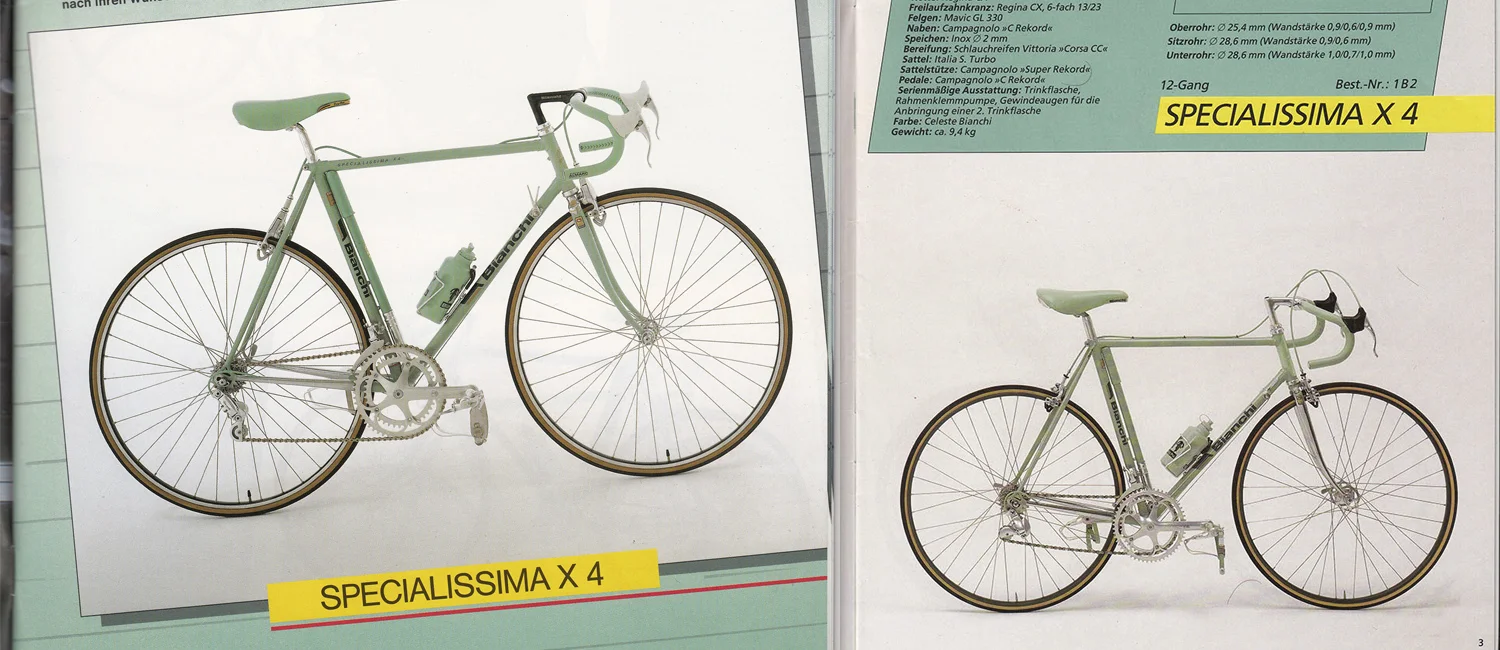
Here's a couple of examples of models destined for retail sales.
X4 Bianchi Specification - 1987 - from the US Catalogue (Note the use of both Campagnolo C-Record and Campagnolo Super Record)
Bianchi Black and Silver pro rims with Vittoria CG tubular tires the X-4 is accented with expensive Bianchi Pantographing. Team Issue SLX/SPX frameset featuring full Campagnolo C Record Group with Bianchi special anodization. Handlebars are hand stitched in Celeste Almarc leather. Campagnolo C Record front derailleur, rear derailleur, friction gear shift levers, seat post, bottom bracket, crankset, hubs and headset. 51, 53, 55, 57, 59, 61cm Celeste Frame Details Columbus SLX/SPX throughout, Bianchi investment cast B.B. and lugs, front derailleur braze-on, Bianchi engraving, 2 bottle mounts, pump peg, chrome plated Campagnolo fork ends, chrome plated right and left chainstays. Fork and Headset Columbus SL with investment cast chromed engraved fork crown, Campagnolo C Record Brakeset Campagnolo Super Record. C Record pantographed levers - aero kit. Handlebar and Stem 3T Competizione Aero, 3T AR84 pantographed. Crankset Campagnolo C Record pantographed anodized chainrings 53/42T Pedals Campagnolo C record Saddle and Seatpost Selle Italia Super Turbo. Campagnolo Super Record. Hubset and Spokes Campagnolo C-Record. Alpina Inox. Freewheel and Chain Regina CX silver 13-23T. CX silver. Tires and Rims Vittoria CG, Bianchi Speciale. Miscellaneous Campagnolo C Record toe clips, straps, water bottle, pump, stitched leather bar wrap.
The speed bicycles 1988 example almost replicates the 1987 catalogue spec for retail Bianchi X4's, except for the internally lugged fork crown.
In 1987 Bianchi boasted of the quality workmanship put out by two north Italian bicycle artisans working in the reparto corse division, Osvaldo Bettoni and Pietro Fanzanga. Bettoni had raced for the Bottechia squad and finished the 1977 and 1978 editions of the Giro di Italia."Our resource is the Northern Italian bicycle artisan. Day in day out individuals like Pietro Fanzaga and Osvaldo Bettoni make Bianchi bicycles for you as well as riders like Moreno Argentin."

You could sum up the general style of the Bianchi X4 by simply referring to these details.
1. Top eye attachment style
2. Investment cast chrome fork crown (painted on Argentin version)
3. Investment cast bottom bracket designed with special gusset
3. Columbus SLX, SPX or TSX tube sets with Columbus investment cast lugs
4. Pantographed Columbus head tube
5. Investment cast brake bridge
7. Internally routed rear derailleur cable, routed through drive side chain stay.
8. Chrome on the Bianchi celeste models, chain stays,fork crown and front derailleur braze on. Argentin version black and celeste no chrome.
9. Campagnolo Corsa Record equipped, some customers chose Shimano Dura Ace or high end Campagnolo group sets like Croce D’aune
10. Switch from 3ttt stem and bars to ITM from 1988 onwards
11. Campagnolo dropouts
12. Columbus aero shaped fork blades and seat stays
All this means just one thing. By the time you’ve got your hands on one of these elusive steel Bianchi race machines, then successfully navigated the expansive list of variants, finally deciphering the Bianchi X4 code. Your very special Bianchi is bound to be unique.
More Info
Bianchi Catalogues at Velobase
Post last updated 4 November 2021

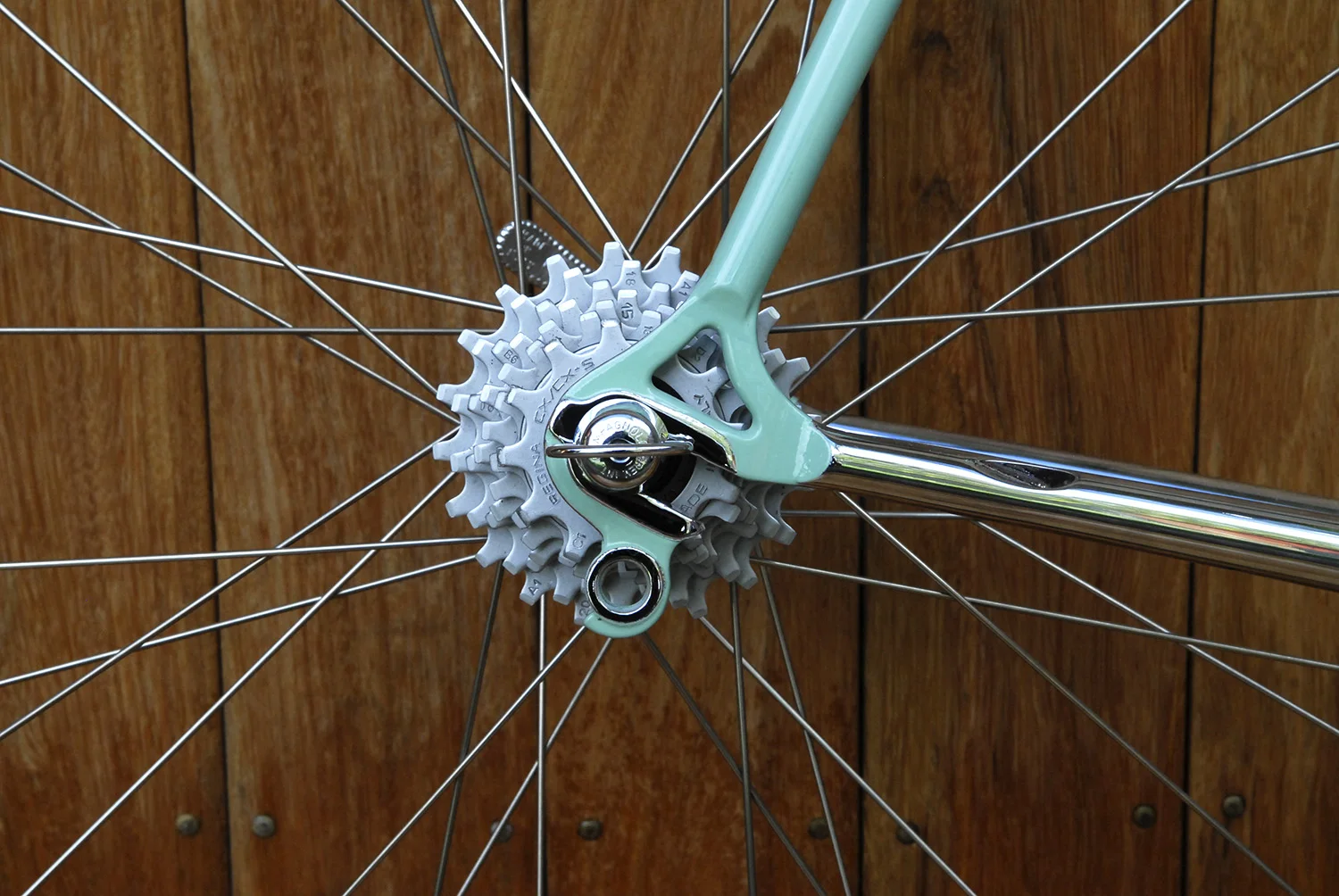


The story of an almost new 1988 Bianchi x4, ridden only a few km's. Winner of Road Bike Of The Year at Pushies Galore 2015.